Factor4 pioniert met Pay-4-Performance programma’s

Factor4 ontwikkelde samen met andere Europese energie-experts een methode voor het realiseren van Pay-4-Performance (‘P4P’) programma’s in de gebouwde omgeving.
Factor4 ontwikkelde samen met andere Europese energie-experts een methode voor het realiseren van Pay-4-Performance (‘P4P’) programma’s in de gebouwde omgeving. Pay-4-Performance laat toe om op een efficiënte manier energierenovaties in grote groepen van gebouwen te realiseren.
De volgende 7 video’s leggen in een klare taal de voordelen en mogelijkheden van deze-programma’s in België en andere Europese lidstaten uit. Factor4 ontwikkelde deze Engelstalige video’s als onderdeel van het Europese onderzoek- en innovatieprogramma Horizon 2020.
1: P4P-programma’s in gebouwen: het algemene concept
2: Welke voordelen genereren P4P-programma’s in gebouwen voor het elektriciteit productie- en distributiesysteem?
3: Hoe kunnen P4P-programma’s een impuls geven aan een CO2-neutrale maatschappij?
4: Hoe beheer je een P4P-programma?
5: Hoe de eerste P4P- pilotprogramma’s opzetten?
6: Hoe kunnen P4P-programma’s derde partijfinanciering mogelijk maken?
7: Dank je wel!
Interesse? Contacteer dan Geert Goorden (geert.goorden@factor4.eu, +32 477 59 89 03) of Johan Coolen (johan.coolen@factor4.eu, +32 494 72 97 95) van Factor4.
Recent articles

IPMVP Training – Measurement & Verification (M&V) by Sven Wuyts
Factor4 is organizing a practical training on IPMVP – Measurement & Verification (M&V), the international standard for accurately measuring and proving energy savings. Click for more information.

Province of West Flanders decarbonises six sites through innovative energy performance contract
The Province of West Flanders is taking an important step in the decarbonisation of its building portfolio.
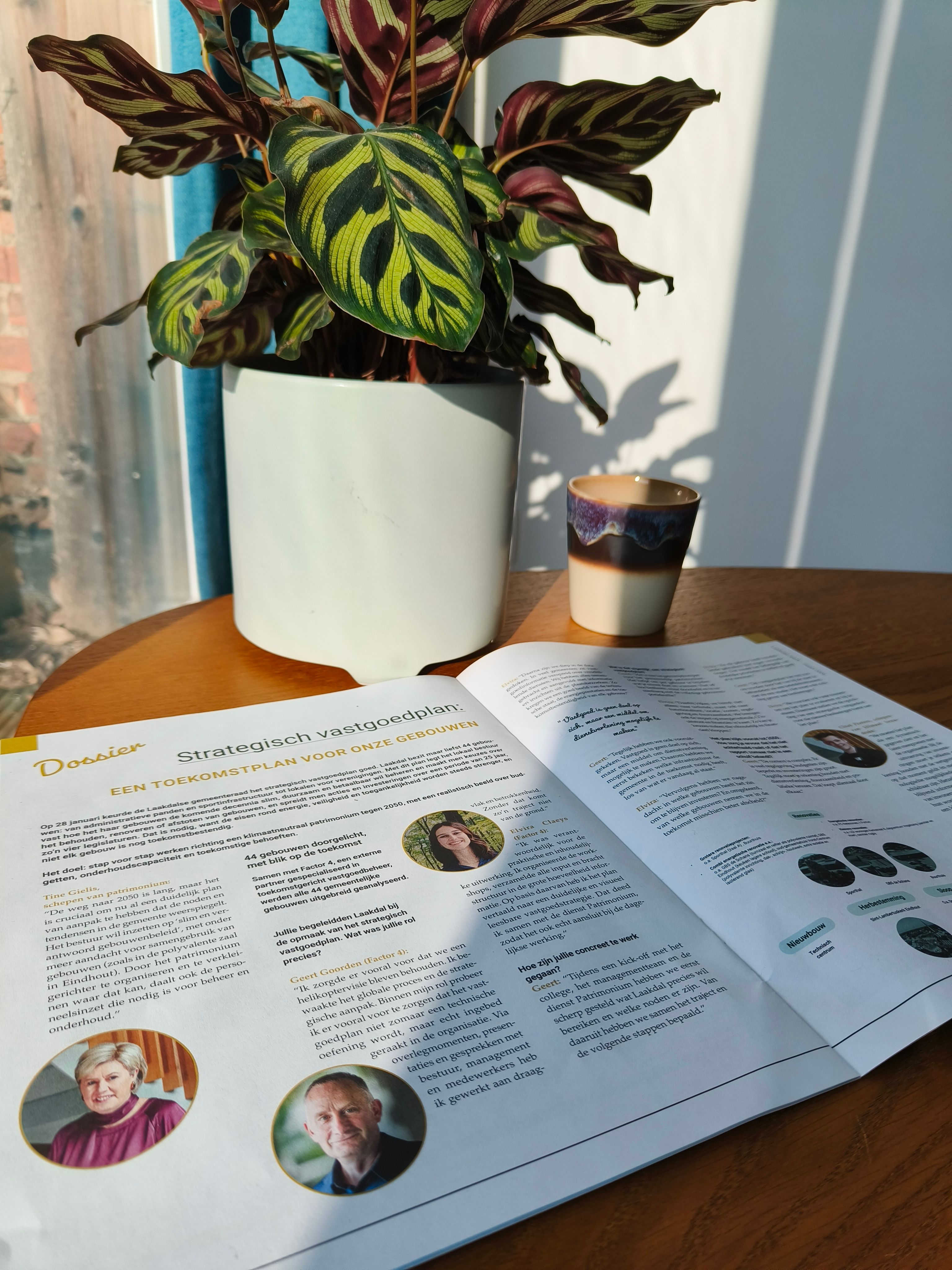
Strategic real estate plan for Laakdal approved by municipal council
Factor4 supported Laakdal in the development of the strategic real estate plan. The objective: to structurally align municipal real estate with the public services provided by the local authority, both today and towards 2050.