From EPC-NR to MJOP: everything integrated into one clear approach

As a building manager, you have to juggle many responsibilities at the same time. You must comply with increasingly stringent energy and climate regulations (such as EPC NR), organise structural and cost-efficient maintenance (through condition assessments and MJOPs), and at the same time keep energy costs under control through targeted energy audits. In practice, these trajectories often run in parallel, while the associated data is scattered across different systems and reports. As a result, the overall overview is lost — costing both time and money.
The challenge: lots of data, little overview
Experienced facility and asset managers know this all too well. Over the years, valuable information about buildings is collected, but the overall picture gradually gets lost. Data ends up scattered across different reports and systems, such as:
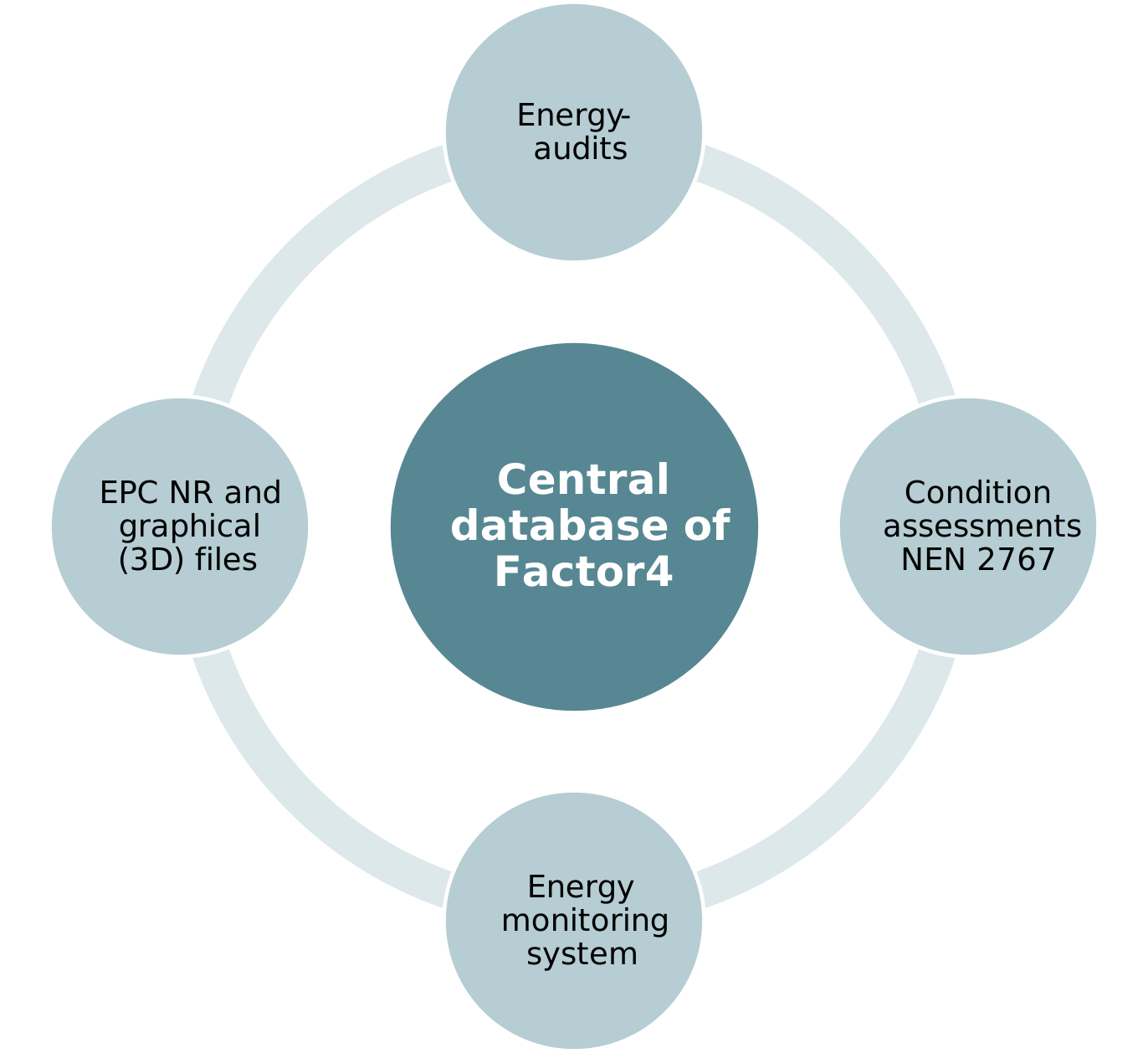
energy audits
EPC-NR certificates with accompanying graphical (3D) documentation
condition assessments in accordance with NEN 2767
energy monitoring systems
FMIS platforms such as Ultimo, Planon, TOPdesk, and Spacewell
Each document contains relevant insights, but because they exist in isolation, it becomes difficult to identify relationships and make well-founded decisions.
The solution: one integrated system
That is why Factor4 has brought all its processes and tools related to these end products together into a single integrated system. At its core lies a central database in which all buildings, elements, and associated client information are managed consistently and unambiguously.
Each building component is assigned one fixed code and name, used consistently across all applications and reports. This makes information truly comparable and immediately usable.
For example, a flat roof has the same identity throughout Factor4’s ecosystem:
in the energy audit, where insulation measures are calculated
in the condition assessment, where defects and condition scores of the roofing are recorded
in the graphical EPC-NR file, where the exact location is instantly clear
In addition, all our tools use the same consistent structure for each client’s portfolio, organised into sites and buildings. This allows energy consumption data from the energy monitoring system to be directly linked to the results of an energy audit or the condition state of that very same building.
Your benefits
This integrated approach delivers immediate and tangible benefits:
Significantly lower costs thanks to efficient processes and data reuse
No more fragmented reports — everything in one place
Full insight into energy performance, technical condition, and maintenance
Better decision-making based on one consistent and reliable dataset
Future-ready, with a solid foundation for long-term management and strategic investments
With Factor4, you turn data into a powerful steering instrument for sustainable and cost-efficient building management.
Would you like to know more? Contact us (here) and book an online meeting right away. We will be happy to explain our approach personally.
Recent articles

15 years of experience with NEN 2767: the maintenance standard that has taken Belgium by storm
In 2010, Factor4 was the first Belgian consultancy firm to examine the then relatively new and promising Dutch standard NEN 2767. This standard makes it possible to assess the technical condition of building components and installations in a uniform, objective, and reproducible manner.
From EPC-NR to MJOP: everything integrated into one clear approach
As a building manager, you have to juggle many responsibilities at the same time. You must comply with increasingly stringent energy and climate regulations (such as EPC NR), organise structural and cost-efficient maintenance (through condition assessments and MJOPs), and at the same time keep energy costs under control through targeted energy audits. In practice, these trajectories often run in parallel, while the associated data is scattered across different systems and reports. As a result, the overall overview is lost — costing both time and money.
VDAB takes major steps toward greater workplace comfort
Investing in comfortable workplaces pays off. VDAB proves this with the results of its most recent Comfortmeter survey, conducted by Factor4. After the first measurement in 2017, a new survey was carried out in the winter 2024-2025 to assess how employees experience their workplace comfort. The result? A noticeable improvement in both satisfaction and overall well-being at work.