Factor4 powers the shift to sustainable schools

In 2024, Factor4 prepared EPC NR certificates for 14 schools, resulting in 75 certificates. Besides certification, Factor4 also developed action plans with concrete recommendations to improve energy performance and make buildings more sustainable.
This year, Factor4 completed an important project for the 14 KVO (Catholic Flemish Education) schools. For each of these schools, Factor4 created EPC NR certificates, resulting in 75 certificates. However, the project went beyond mere certification. Factor4 also provided concrete recommendations and drew up an action plan, enabling the schools to take targeted steps to improve their energy performance and make their buildings more sustainable.
Drafting the EPC NR certificate:
The first step involved on-site data collection. Factor4 carried out a thorough site visit for each school, gathering information on the building structure, the technical installations and energy consumption. During these visits, measurements were taken, checklists completed and photographs taken. Where necessary, additional information was requested, such as technical documentation and energy consumption figures. Factor4 then carefully analyzed all collected data and entered it into the VEKA platform, leading to a detailed EPC NR certificate with associated label for each building. This process provided a clear insight into the schools' energy performance.
Drafting the action plan:
After preparing the EPC NR certificates, Factor4 drew up an action plan for each school. Factor4 investigated possible energy-saving measures, such as improving insulation, optimizing heating installations, installing solar panels and replacing outdated lighting. The feasibility, costs and savings of these measures were carefully considered and reported.
Thanks to this project, the schools now not only meet the legal obligations for obtaining an EPC NR certificate, but also have concrete, tailor-made recommendations for improving their energy performance and energy label. School boards now have a clear route ahead to optimize their energy consumption, save costs and contribute to a more sustainable future.

Recent articles

IPMVP Training – Measurement & Verification (M&V) by Sven Wuyts
Factor4 is organizing a practical training on IPMVP – Measurement & Verification (M&V), the international standard for accurately measuring and proving energy savings. Click for more information.

Province of West Flanders decarbonises six sites through innovative energy performance contract
The Province of West Flanders is taking an important step in the decarbonisation of its building portfolio.
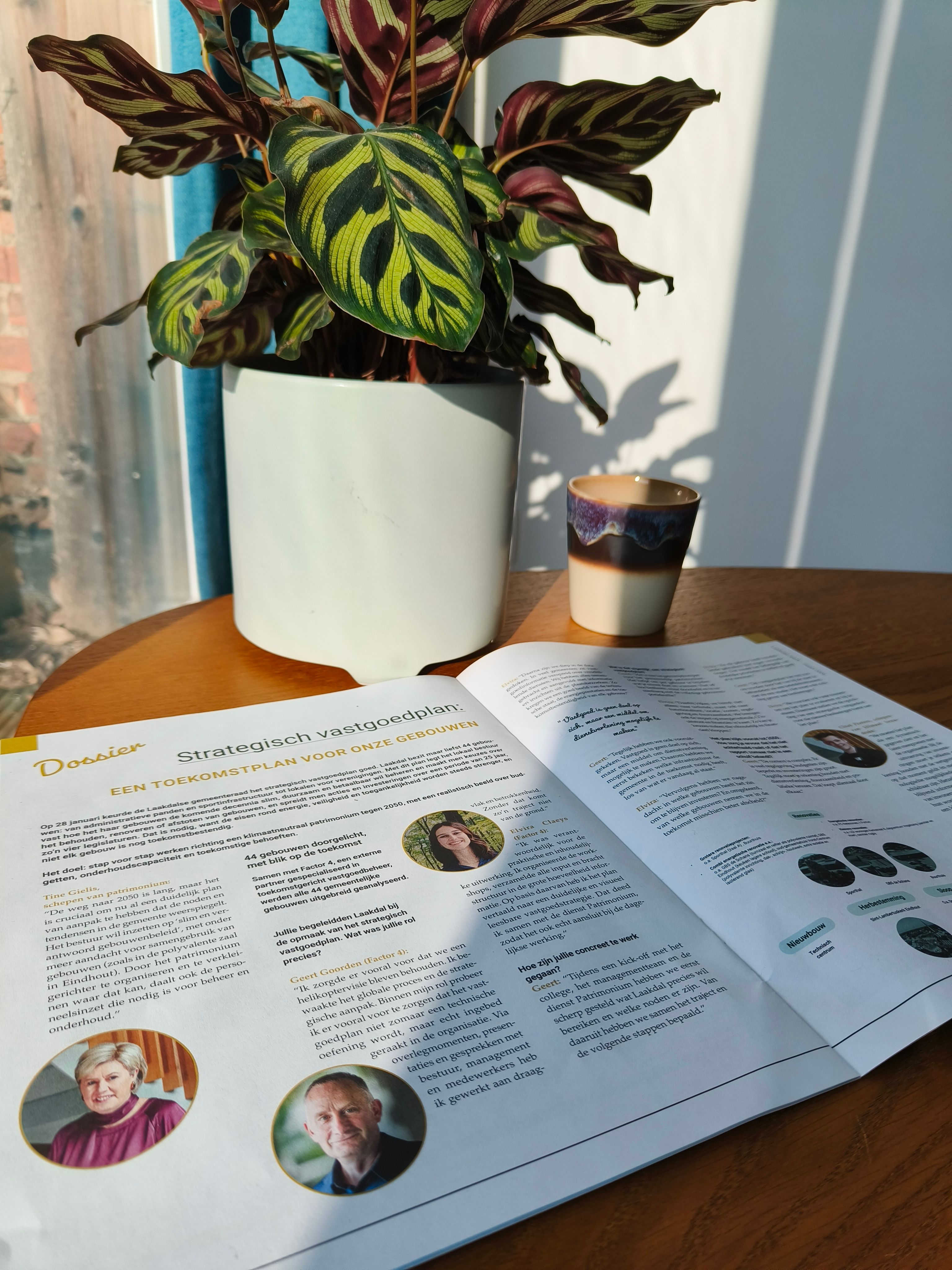
Strategic real estate plan for Laakdal approved by municipal council
Factor4 supported Laakdal in the development of the strategic real estate plan. The objective: to structurally align municipal real estate with the public services provided by the local authority, both today and towards 2050.