Factor4 guides Triginta in transition to climate neutral heritage

Triginta is taking big steps towards a sustainable future with help from Factor4. Through innovative methods and targeted energy audits for 12 of its locations, Triginta is preparing its property portfolio for the Paris Agreement's climate targets. Thanks to this collaboration, Triginta remains at the forefront of making real estate more sustainable and turns firm ambitions into concrete results.
Triginta is making significant strides towards climate neutrality and relies on Factor4's expertise for this. With the ambition to meet the climate objectives of the Paris Agreement, Triginta had Factor4 carry out a thorough study for 12 of its real estate locations. For this, Factor4 used the innovative CRREM method, which determines what the maximum allowable CO2 emissions per building type should be. This method is fully aligned with the long-term climate goals of the real estate sector. By implementing these measures, Triginta aims to prevent their buildings from being considered ‘stranded assets’ in the future, which is a potential risk for real estate companies.
Factor4 started with a comprehensive inventory of the building and installation characteristics of all 12 sites, documenting everything - from gas boilers and lighting to heating circuits - and converting them into a clear database. This detailed inventory formed the basis for the subsequent energy audit.
During the audit phase, appropriate energy-saving measures were selected and calculated for each site. Factor4 provided an accurate calculation of investment costs, expected energy savings and CO2 emission reductions, and net cost savings. Two scenarios were developed for each building: a cost-effective scenario and a climate-neutral scenario. These scenarios were then compared with the results of the CRREM curve, which clarified which investments are necessary in which year and which cost savings Triginta can expect in the long term.
A special heritage energy audit was carried out for the three protected heritage buildings within the project, compliant with guidelines of Erfgoed Vlaanderen.
In addition, Factor4 took care of preparing EPC-NR certificates for five of the sites, further mapping the energy performance of the buildings.
With this collaboration, Factor4 once again demonstrates its expertise in making existing buildings more sustainable, while Triginta prepares its real estate portfolio for a climate-neutral future.
Recente artikelen

Opleiding IPMVP – Measurement & Verification (M&V) door Sven Wuyts
Factor4 organiseert een praktische opleiding over IPMVP – Measurement & Verification (M&V), de internationale standaard om energiebesparingen correct te meten en te bewijzen. Klik voor meer informatie.

Provincie West-Vlaanderen verduurzaamt zes sites via innovatief energieprestatiecontract
De Provincie West-Vlaanderen zet een belangrijke stap in de verduurzaming van haar patrimonium.
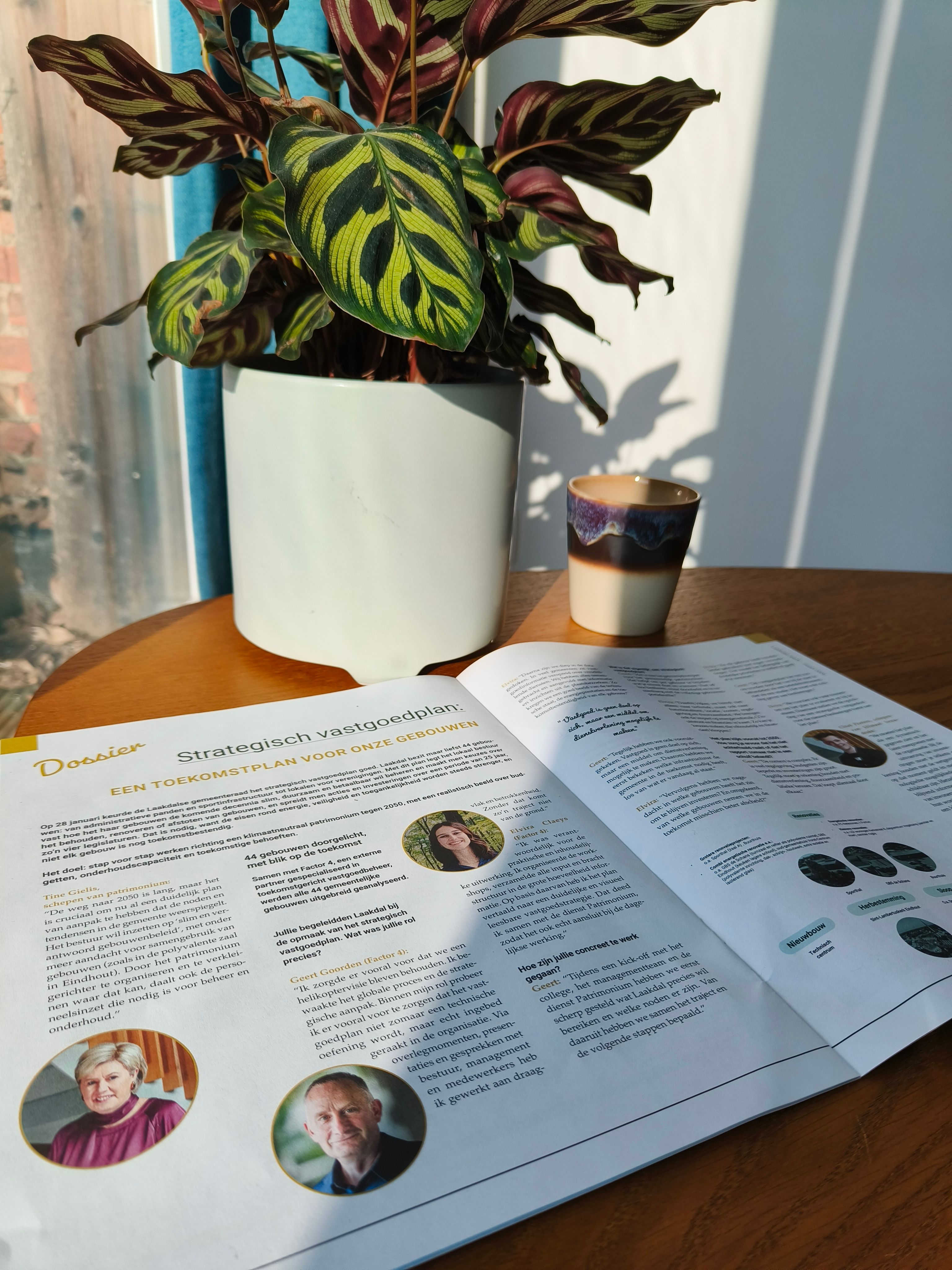
Strategisch vastgoedplan voor Laakdal goedgekeurd door de gemeenteraad
Factor4 begeleidde Laakdal bij de opmaak van hun strategisch vastgoedplan. Het doel: het gemeentelijk vastgoed structureel afstemmen op de maatschappelijke aanbod van het lokaal bestuur, vandaag én richting 2050.