EPC Label requirement at portfolio level: A game-changer for strategic real estate management
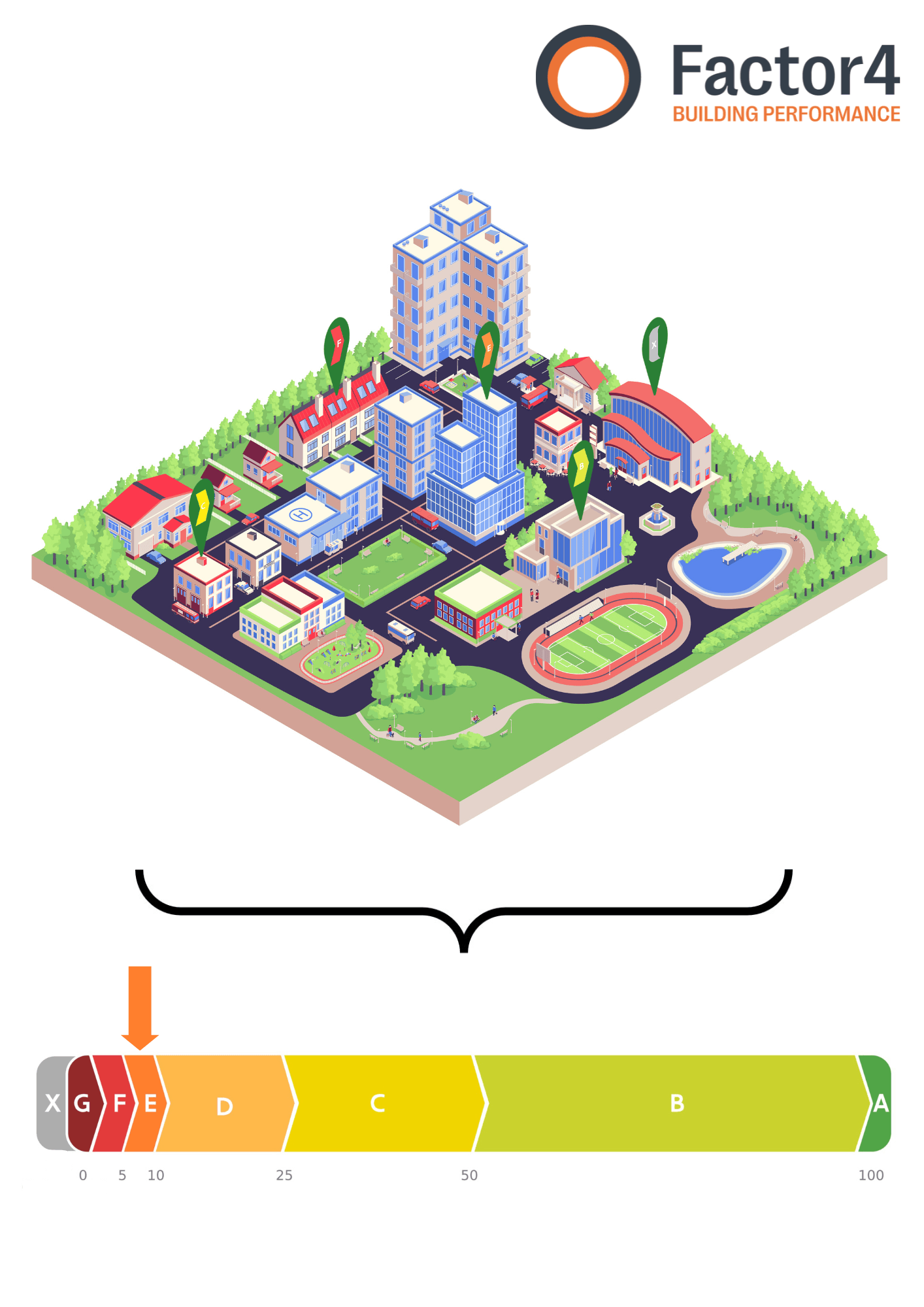
Building energy regulations are undergoing a major update. Whereas previously each individual building had to comply with the EPC label requirement, it will soon be possible to meet this requirement at the portfolio level. This gives property owners, from school networks to real estate portfolio managers, far greater strategic freedom to phase renovations intelligently and allocate resources more effectively. This change makes the strategic real estate plan more important than ever: it becomes the key instrument to meet legal obligations efficiently while achieving the greatest sustainable impact.
With the EPC label requirement for individual buildings soon to be applied at the portfolio level, a strategic real estate plan is becoming more important than ever.
On 14 and 18 July 2025, the Flemish Government provisionally approved an amendment decree and an amendment decision. These form the basis for several key adjustments that provide greater flexibility in making property portfolios more sustainable. A strategic real estate plan ensures this greater flexibility is maximised: it helps determine which buildings should be tackled first, how resources are best allocated, and how legal requirements can be met on time and in a cost-effective way.
But what exactly does a portfolio-level label requirement mean? And how do you get started?
Until now, every single building had to comply with a minimum energy performance label. With the new regulations, it will become possible to apply this requirement across the entire portfolio.
In practice, this means that property owners with large building portfolios, such as school networks, real estate portfolio managers, or organizations with multiple sites, will be able to:
Renovate more strategically, for example by investing first in the largest or worst-performing buildings
Gain more freedom in the sequencing of renovations, as long as minimum requirements are met
Align renovation obligations more closely with their long-term strategy
This approach fits seamlessly with a phased strategy, where impact is achieved step by step. By developing a strategic real estate plan, organizations can shape this phased approach effectively and ensure that investments, renovations, and energy performance are fully aligned.
Other important changes
In addition to the option to meet EPC label requirements at portfolio level, the reform package also introduces several other relevant adjustments:
Choice of designation: For residential buildings located on the same site as non-residential buildings, it will be possible to opt for a single EPC for non-residential buildings (EPC-NR). This simplifies administration, for example in the case of assisted living units next to a care facility, or studios next to a hotel or rehabilitation center.
EPC-NR by in-house experts: Internal energy experts will still be allowed to issue EPCs for non-residential buildings for their own employer until 31 December 2029.
BACS obligation: Non-residential buildings with heating and/or cooling systems over 290 kW must be equipped with a building automation and control system (BACS) by the end of 2025. By 2030, this threshold will be lowered to 70 kW. Buildings with only one of the three systems (heating, cooling, or ventilation) are exempt
Recente artikelen

Opleiding IPMVP – Measurement & Verification (M&V) door Sven Wuyts
Factor4 organiseert een praktische opleiding over IPMVP – Measurement & Verification (M&V), de internationale standaard om energiebesparingen correct te meten en te bewijzen. Klik voor meer informatie.

Provincie West-Vlaanderen verduurzaamt zes sites via innovatief energieprestatiecontract
De Provincie West-Vlaanderen zet een belangrijke stap in de verduurzaming van haar patrimonium.

Strategisch vastgoedplan voor Laakdal goedgekeurd door de gemeenteraad
Factor4 begeleidde Laakdal bij de opmaak van hun strategisch vastgoedplan. Het doel: het gemeentelijk vastgoed structureel afstemmen op de maatschappelijke aanbod van het lokaal bestuur, vandaag én richting 2050.